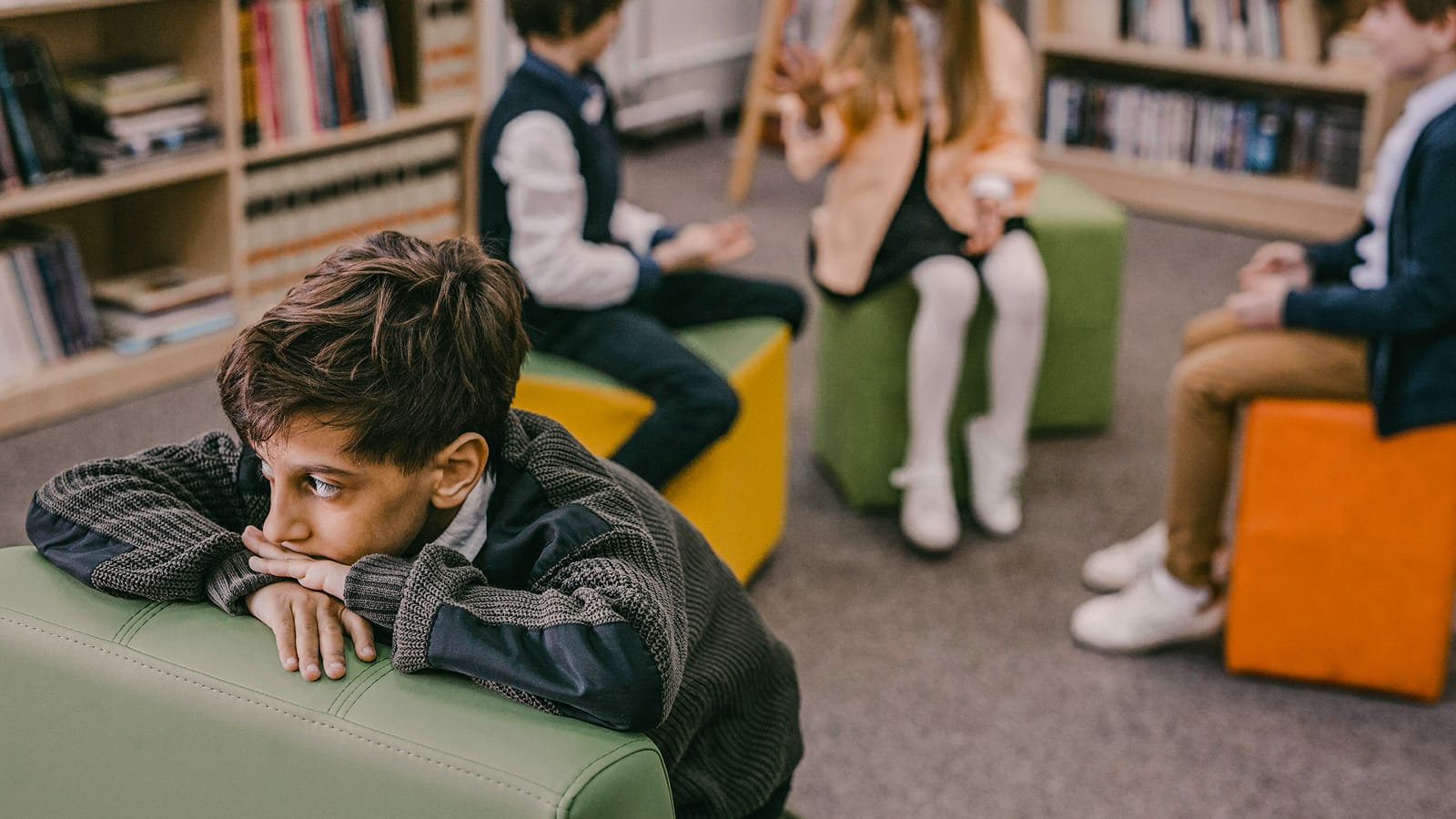
There are so many reasons children can struggle socially. They may be introverted and shy, they may not have strong enough communication skills to manage the problem solving and day to day banter required to play with friends, they may have learning or developmental differences that result in less successful unstructured playtime or just less free play time overall, or it may be that they need more practice, less time on screens and more adult supported (but not adult directed) opportunities to connect with other children in a meaningful and relaxed way.
As a parent it is very hard when your child is struggling socially at school. It’s hard when they tell you about it and it's equally hard when they don’t tell you about it, but you just have the sense that their day-to-day social experience isn’t going very well.
What can parents do?
1. Talk with your child’s teacher
Sometimes talking to the teacher is simply the reassurance you might need and it can be helpful to hear from an adult what is going on at school. They may have some unique insights, having observed your child at play. It often isn’t totally one sided, in other words, there may be more to the story that you are getting.
For example, they may say, your child really only seems interested in playing with one child in particular and is ignoring lovely social overtures from several other children. Or they may say something like, your child is really stuck on wanting to play one thing and children have moved on from that theme for the time being. What your child’s teacher shares may be enough for you to know what to do and how to help.
2. Schedule some playdates
You may not be able to control what happens in school so turn your attention to what you can do. You can set up some simple and fun out-of-school play opportunities. Make some playdates in calm and relaxed spaces with both classmates from school and kids outside of school. Choose children that are the same age as your child to give them more practice with the age they are around most in school. If your child gravitates toward children older or younger than themselves that may offer you a clue as to what is going on.
3. Boost your child
We want to give kids the message that they don’t need to look outside of themselves for validation. And that while yes, it's nice to have a close buddy or a group, they don’t necessarily need that to feel good and have fun. Friendships will come more readily when your child can stand tall and know what they like.
Help your child readily answer the question: “I’m the kid who_____” with a positive ending. Help them define some of the things that make them unique, some of their passions, and what characteristics they like in others.
These messages are best delivered not in a “big talk” format, but more in micro conversations. Look for little moments where you are able to slip in that you notice your child is a keen observer, or that they are really good at handy crafts or that they tend to like the extended family members that have a soft spoken and quiet disposition. These little moments and talks will help them begin to define who they are and what they like and ultimately who they enjoy connecting with.
4. Read and talk
There are two great places for discussing social competence that don’t feel like a direct threat and won’t send your child running: The car and during bedtime stories. The car is great because they are literally a captive audience, there’s nowhere to run. Also, there is the fact that you are not face to face, there is a bit of space between you both which allows for a bit of reflection. If the chat isn’t landing you can easily move on by turning on some music but it’s an easy place to check in or share ideas.
During bedtime stories, you are cozy together, which increases feelings of connection and safety, and you can use your book characters to talk about things that are similar in real life.
Here are some books to read with preschool and kindergarten-aged children that may aid in discussions about social competencies, social problem solving, and/or the idea that it’s okay to be different or to choose to do your own thing.
Preschool:
- The Rabbit Listened by Cori Doerrfeld
- Elephant and Piggy (series) by Mo Willems
- Will I Have a Friend? by Miriam Cohen
- Feelings By Aliki
- It’s OK to be Different by Todd Parr
Kindergarten and early elementary:
- Chrysanthemum by Kevin Henkes
- The Almost Terrible Playdate by Richard Torrey
- Stick and Stone (series) by Beth Ferry and Tom Lichtenheld
- Hum and Swish by Matt Myers
- The Bad Seed (series) by Jory John
Oftentimes the more subtly related the book is to the topic at hand the better. For example, you can discuss friendship dynamics while reading Harry Potter with your early elementary-aged child. The book doesn’t need to be about whatever you are hoping to support, in fact, best if it’s not, but when a moment comes up in the book it feels more natural and less threatening than when the entire story is leading up to the super obvious discussion.

It’s very easy to get wrapped up in your child’s social world, and of course we want our children to be happy and have friends so why not dive in to try to help. Be mindful that a little bit of struggle is normal and part of their developing social skills. It’s also important that they deepen their resilience and learn to shake certain things off. Take time to reflect on how much of what you’re thinking about, or observing, may be triggering previous social issues that belong to you. If you aren’t sure how much to support things you can talk to a child psychologist or a school psychologist, many parents do, and it isn’t taking things too far to get a professional sounding board.
Follow the above tips and try to keep it all in perspective. You got this!